Whether you’re undertaking a digital detox or a social media detox, here’s how to achieve success and reap all the benefits.
SUCCESS
Finding Peace When You Don’t Know What Comes Next

“Sometimes letting things go is an act of far greater power than defending or hanging on.” ~Eckhart Tolle
For as long as I can remember, I’ve been the kind of person who plans everything.
My calendar was color-coded, my to-do lists perfectly alphabetized, and I could tell you what I’d be doing six months from now almost down to the hour.
I thought control meant safety. If I could organize my world tightly enough, maybe nothing bad would happen.
For a long time, that illusion worked. I graduated near the top of my class, got a good job, and built a life that looked stable on the outside. Inside, though, I was wound tight. I woke up with tension in my chest most mornings, and my brain rarely stopped spinning. What if I missed something? What if I made the wrong choice?
I told myself that once everything settled—once I achieved enough, earned enough, planned enough—then I’d finally relax. Of course, that day never came.
The Year Everything Fell Apart
Then came the year when everything I’d carefully constructed began to crumble.
It started with my relationship. After three years together, my partner sat me down one evening and said the words no one ever wants to hear: “I don’t think we’re right for each other anymore.”
I remember nodding calmly, trying to sound reasonable, even while my stomach churned. After he left, I spent the night staring at the ceiling, replaying every moment, trying to find the exact point where I could have changed the outcome.
A month later, the company I worked for announced a round of layoffs. My department was “restructured.” I had two weeks to pack up my desk.
Losing both my relationship and job in the same season felt like freefall. I’d built my life around control—around keeping everything secure—and now there was nothing left to hold onto.
I told myself I’d bounce back quickly. I made lists of places to apply, people to network with, and backup career options. I filled every minute of my day with activity because sitting still felt unbearable.
But the harder I tried to fix my life, the more lost I felt.
The Moment I Finally Stopped
One gray afternoon, I was sitting in my car outside a coffee shop, surrounded by job applications and empty takeout cups. I was supposed to be preparing for another interview, but I couldn’t make myself move. My hands were trembling on the steering wheel.
In that moment, something inside me just broke. I remember whispering out loud, “I don’t know what I’m doing anymore.”
And then, for the first time in months, I stopped trying.
I sat there in silence for what must have been twenty minutes, staring out the window at the rain streaking down the glass. My breath came slow and heavy. There was nothing left to plan or fix.
Strangely, instead of panic, I felt something else: relief.
It was as if the world had been waiting for me to stop fighting it.
Learning to Live Without a Plan
That day marked the beginning of something I didn’t yet have words for: surrender.
At first, it wasn’t graceful. I felt uncomfortable doing “nothing.” My mind would jump in, demanding answers—What’s next? What if you fail? What if people think you’ve given up?
But each time those thoughts came, I tried something new. Instead of reacting, I just noticed them. Sometimes I’d say quietly to myself, “Maybe I don’t need to know right now.”
I started taking long walks without my phone. I paid attention to small things—the sound of leaves scraping the sidewalk, the rhythm of my steps, the way the air felt against my skin.
At night, I stopped forcing solutions. Instead, I’d write down a question like What do I really want? and let it sit there, unanswered.
Slowly, the space that used to be filled with anxiety began to soften.
The Unexpected Invitation
About two months later, I got a message from a friend I hadn’t seen in years. She worked at a community center that offered free English classes for newly arrived refugees. One of their teachers had suddenly quit, and they needed a volunteer to fill in temporarily.
“Just a few weeks,” she said. “Until we find someone permanent.”
Old me would have hesitated immediately. I wasn’t a teacher. It didn’t fit my plan. It wasn’t “practical.”
But something in me had shifted. I said yes without overthinking.
The first day, I stood in front of a room of people from half a dozen countries, all smiling nervously, clutching notebooks and pencils. I stumbled through my introduction, certain I was making a fool of myself. But within minutes, the nervousness melted.
We laughed over pronunciation mishaps, drew pictures to communicate when words failed, and celebrated when someone managed a full sentence in English.
Every time one of my students said “thank you” with that bright, genuine smile, something in my heart unfurled.
It wasn’t glamorous. It wasn’t high-paying. But it felt real. I left each class lighter than when I’d arrived.
For the first time in years, I wasn’t chasing an outcome. I was simply showing up.
The Subtle Transformation
That volunteer position ended up lasting six months. By the time it was over, I’d discovered something profound: peace doesn’t come from controlling life. It comes from allowing yourself to be part of it.
When I stopped micromanaging the future, I began to notice the beauty of the present—tiny, easily missed moments that had always been there.
A child laughing on the bus. The smell of fresh rain on concrete. The way sunlight filters through tree branches in the afternoon.
Before, I’d been too busy worrying about what might happen to notice what was happening.
And the more I noticed, the less I needed to control.
I realized that uncertainty isn’t the enemy—it’s the birthplace of possibility. When you stop forcing life to match your expectations, it starts surprising you in the best ways.
Letting Life Lead
Eventually, the experience at the community center led to a job offer at a local nonprofit. I didn’t plan it, didn’t chase it—it just unfolded naturally.
But more than the new job, what stayed with me was a quieter sense of trust.
Now, when things don’t go my way, I still feel disappointment—but I don’t spiral the way I used to. I’ve learned that life has a rhythm of its own, one I can’t always understand but can learn to flow with.
Sometimes the plans that fall apart are the ones that make room for something truer to emerge.
The Ongoing Practice of Letting Go
Letting go isn’t something I mastered once and for all. It’s a daily practice.
There are still days I catch myself gripping too tightly—refreshing my email every five minutes, replaying conversations in my head, worrying about what’s next.
When that happens, I remind myself to breathe. Literally—to take one deep, slow breath and feel the air move through me. It’s a way of returning to the present moment, where life is actually happening.
From there, I ask one gentle question:
What if everything is unfolding exactly as it should?
That single thought softens the tension every time.
What I’ve Learned
Looking back, I can see that losing control wasn’t a failure—it was an invitation. An invitation to trust life instead of managing it, to listen instead of dictate, to experience instead of analyze.
Here’s what I’ve learned:
Control is often a disguise for fear.
When I felt scared or uncertain, I tried to fix everything. But peace didn’t come from fixing—it came from accepting.
Uncertainty is not chaos.
It’s space—space for new growth, for unexpected joy, for learning who you are when the old plans fall away.
Surrender is active, not passive.
It’s not giving up—it’s choosing to participate in life as it unfolds, instead of fighting against it.
Presence changes everything.
The more I stay grounded in the moment, the less I need the illusion of control.
A Quiet Invitation
If you’re in a season of uncertainty right now—if life feels messy and unplanned—I know how uncomfortable that can be. But maybe, just maybe, it’s not something to fix. Maybe it’s something to trust.
Try this:
Stop for a moment and feel your breath move in and out of your body. Notice your surroundings—the texture of the chair beneath you, the sounds in the background, the rhythm of your heartbeat.
Right here, in this ordinary moment, you are safe. You are alive. You are enough.
You don’t need to have it all figured out. You just need to be here, open and willing to let life lead you.
When you release your grip on how you think things should be, you create space for something far better than control: peace.
And peace, I’ve learned, has a way of showing you exactly where to go next.

About Franco Aison
After years of studying Buddhism, Franco shares insights on life’s deeper truths, karma, and the transformative power of Buddhist mantras. Through reflections and practice, he explores how ancient wisdom can bring peace, clarity, and good fortune in our modern lives. Discover more at startgoodluck.com.
Get in the conversation! Click here to leave a comment on the site.
Lost Your iPhone? Easy Steps to Find It Even if It’s Dead
Losing your iPhone at the beginning of the New Year is no fun, but there’s hope. Here’s what you can do to find it.
8 Simple Ways to Succeed at Dry January This Year
Want to stop drinking for a month or more? Following even just one of these tips can help.
Here Are the 7 Best Places to Sell Your Tech Clutter This New Year
Give your space a New Year’s reset. Instead of letting your old electronics collect dust, check out these top marketplaces to turn your clutter into cash.
How Much Are Dog Shots?
How Much Are Dog Shots?: Quick Answer
While dog vaccination costs vary according to the vaccine and where you get your dog vaccinations, the average cost per shot is between $20 and $60. Puppy vaccination costs are slightly higher because they should follow a puppy vaccination schedule, which requires a series of vaccinations and boosters beginning at six to eight weeks of age.

How much are vaccines for dogs?
The cost of vaccines for dogs ranges from $27 to $96 per vaccine, according to Care Credit, a financing service often used for veterinary expenses. Prices vary according to the specific vaccine — a rabies vaccine typically costs less than a Lyme vaccine, for example — as well as the veterinary practice you choose.
As veterinary care gets more expensive each year, preventive health services turn evermore crucial. Vaccines help your dog stay healthy, decreasing vet bill costs and lowering your chances of having to make an expensive emergency vet visit.
“Vaccines play a critical role in protecting dogs from highly contagious and often life-threatening diseases,” says Dr. Zac Pilossof, consulting veterinarian at Healthy Paws pet insurance. “Especially in puppies, vaccines help stimulate their developing immune systems to build protection early on.”
Read on for a cost breakdown of adult dog vaccines as well as a puppy’s first-year vaccination schedule.
Cost of core vaccines
Essential vaccines, such as the rabies vaccine and the DA2PPv vaccine, are considered core vaccines. These are typically applied on a yearly basis.
Prices for core canine vaccines
|
Vaccine |
Average cost per dose |
Frequency |
|---|---|---|
|
Rabies |
$35 |
Every 1 to 3 years |
|
DA2PPv* |
$42 |
Every year |
Cost of non-core vaccines
Non-core, or lifestyle vaccines, are administered based on your pet’s health, lifestyle and age. For instance, your vet may recommend the Lyme vaccine if your dog lives in a tick-prone area, or the Bordetella vaccine if your dog frequently socializes with other dogs at parks or boarding facilities.
Prices for non-core canine vaccines
|
Vaccine |
Average cost per dose |
Frequency |
|---|---|---|
| Kennel cough (Bordetella bronchiseptica) |
$38 |
Every six months to yearly |
|
Lyme disease (Borrealia burgdorferi) |
$50 |
Two doses, two to three weeks apart, then yearly |
| Leptospirosis (Leptospirosa bacteria) |
$49 |
Two doses, two to four weeks apart, then yearly |
| Rattlesnake vaccine (Crotalus atrox toxoid – CAT) |
$34 |
Two shots, one month apart, then yearly |
How much do puppy shots cost?
The cost of puppy shots starts at $20 and goes up depending on the type of vaccine, where you live and whether you go to a private veterinary practice, low-cost clinic or Humane Society.
Puppies need four shots by the time they’re about four months old: one DA2PP (for canine distemper, adenovirus, parvovirus and parainfluenza) at six to eight weeks old, a second DA2PP at 10 to 12 weeks and a third DA2PP at 14 to 16 weeks, plus one rabies vaccine. The DA2PP vaccine is also known as the DHPP, DAPP and 5-in-1 vaccine.
Your veterinary clinic may offer discounted pricing on puppy shots when you purchase vaccination packages. Some clinics also offer a free wellness exam, deworming and heartworm tests.
Note that you may also be required to pay for a routine fecal exam to test for parasites and a biohazard disposal fee, typically less than $5 per vaccine.
Cost of puppy shots
Puppy vaccination prices
|
Core vaccines |
Non-core vaccines |
Average cost |
Puppy age |
|---|---|---|---|
|
DA2PPv |
Bordetella (kennel cough) |
$20 – $60 |
6 to 8 weeks |
|
DA2PPv |
Leptospirosis, Lyme disease, canine influenza |
$20 – $60 |
10 to 12 weeks |
|
DA2PPv, rabies |
Leptospirosis, Lyme disease, canine influenza, rattlesnake vaccine |
$40 – $105 |
14 to 18 weeks |
|
DA2PPV, rabies |
Bordetella (kennel cough), leptospirosis, Lyme disease, canine influenza, rattlesnake vaccine |
$40 – $105 |
Annual |
What dog vaccines are required?
Dr. Julie Hunt, veterinarian at Embrace Pet Insurance, says that there is one legally required canine vaccine: the rabies vaccine.
All dogs 12 weeks of age or older are required to get the rabies vaccine. Dr. Hunt adds that veterinarians recommend vaccinating most dogs, at least 6-8 weeks of age, for distemper virus, adenovirus, parvovirus and parainfluenza virus. These vaccines are packaged together in a combination vaccine called the DA2PP vaccine, to be administered in a single injection.
Ohio and Hawaii are the only two states that do not legally require residents to vaccinate pets against rabies. Additionally, imported dogs are exempt from mandatory rabies immunization in Georgia, and in Texas, police service animals aren’t required to be vaccinated against rabies.
Medical exemptions for rabies immunization are allowed in the following states:
- Alabama
- California
- Colorado
- Connecticut
- Delaware
- Florida
- Illinois
- Maine
- Massachusetts
- Nevada
- New Hampshire
- New Jersey
- New York
- Oregon
- Pennsylvania
- Vermont
- Virginia
- Wisconsin
Where can I get my dog vaccinated?
You can get your dog vaccinated at a veterinary office. However, if you want to save money on pet costs, look for free or low-cost pet vaccines through the following:
- State and city-run animal shelters – You may be able to find vaccinations and other preventative care at lower prices in local shelters.
- Nonprofit organizations – Animal advocacy organizations like the Humane Society often organize free vaccination events or offer discounted pricing on vaccines.
- Veterinary medicine colleges – Look to the American Veterinary Medical Association (AVMA) for a list of veterinary colleges with low-cost clinics.
- Mobile vet clinics – Veterinary “hospitals on wheels” operate out of vans, bringing often low-cost basic medical care and spay and neuter services directly to you.
- Charity programs – For example, the American Veterinary Medical Foundation offers grants to pet owners in need of financial assistance.
Does pet insurance cover vaccines?
Pet insurance policies do not cover vaccines. However, most pet insurance companies offer supplemental wellness plans (also called routine care packages or add-ons) that include vaccines, spay/neuter surgery and other preventative pet care. These include Pumpkin, Figo, Pets Best, Nationwide, Lemonade, AKC, ASPCA, Wagmo, Fetch, MetLife and ManyPets
How Much Do Dog Vaccinations Cost FAQs
What is Bordetella vaccination for dogs?
The Bordetella vaccination, also known as the kennel cough vaccine, helps prevent canine infectious respiratory disease complex (CIRDC). While Bordetella is a non-core vaccine, vets often recommend this extra protection for dogs who are frequently in contact with other dogs at doggy daycares, dog parks or other places.
Which dog vaccines are absolutely necessary?
Dog vaccines that are absolutely necessary include the rabies vaccine and the DA2PPv, also known as DHPP, which protects against distemper, hepatitis, kennel cough, parvovirus and parainfluenza.
When should a puppy get shots?
A puppy should get its first round of shots at six to eight weeks of age. Its second round should be around 10 to 12 weeks, and the third at 14 to 18 weeks. Note that if your puppy is older than any of these age ranges and hasn’t received any shots, it’s never too late to get the puppy started on a vaccine schedule.
Summary of Money’s How Much Do Dog Vaccinations Cost?
While dog vaccination costs vary depending on the vaccine and the provider, the average cost per shot is between $20 and $60. Puppy vaccination costs are slightly higher because they require a series of vaccinations and boosters during the first year, starting at six to eight weeks of age.
Once your dog completes its first-year vaccination schedule, they will need yearly core vaccinations, which include the DA2PPv vaccine and the rabies vaccine, on top of any non-core vaccinations that your veterinarian recommends.
You can find free and low-cost vaccinations through animal advocacy organizations, mobile pet clinics, local shelters and low-cost vaccination clinics. Some pet insurance companies also offer wellness riders that cover vaccines and other preventative care.
Where You’ll Really Want to Be in 2026

From Milan to Mexico City, these are the luxury locations to head to this year, writes Francesca Perry

Mexico City, Mexico | Mexico Sotheby’s International Realty
Looking ahead, a number of exciting, high-profile events and openings will animate cultural hotspots around the globe in 2026—but where are the biggest draws? Whether you’re a fan of sports, contemporary art or collectible design, here are our picks of the places to set your sights on this year, each with its own real estate landscape, full of opportunities.
Milan, Italy

Milan, Italy | Italy Sotheby’s International Realty
Forever a center of fashion and design, Milan will also co-host the Winter Olympics this February along with the Alpine ski resort of Cortina d’Ampezzo. Music icon Mariah Carey will reportedly perform at the opening ceremony in Milan on February 6, and the city is set to host the ice sport events. Milano Santagiulia Ice Hockey Arena, an arena designed by David Chipperfield Architects for the event, will become a large-scale sports and entertainment venue after the Games conclude.In spring, the agenda-setting Salone del Mobile furniture fair returns (April 21‑26) with a new section dedicated to the very best of collectible design. Named Salone Raritas, the presentation reflects the growing culture of curated, crafted and unique design objects and furniture. Beyond the fair, the entire city comes to life for the week, dotted with exhibitions and installations showcasing the pinnacle of luxury and emerging design.
Doha, Qatar

Doha, Qatar | Qatar Sotheby’s International Realty
Qatar’s capital, Doha, will welcome the inaugural edition of the Art Basel fair in the region on February 5, reflecting the city’s growing cultural prowess. Curated by artistic director Wael Shawky, Art Basel Qatar will present 87 world-leading galleries alongside a special projects program of large-scale, site-specific sculptures, installations and performances unfolding across the Msheireb Downtown Doha district.
Shawky hopes that, under the curatorial banner of Becoming, the fair will be “a meditation on change.” In the Gulf region, he says, “oral traditions flow into digital networks and ancient trade routes return as new pathways of culture and exchange. Here, art is not only a witness to history but a force that shapes how we imagine and reimagine identity.”Two months later, the city will host the second edition of the Design Doha Biennale (April 12‑June 30), exploring the creativity of designers in the Middle East and beyond. American curator and writer Glenn Adamson, curatorial director of December’s Design Miami, is artistic director here, and aims to connect the Gulf’s design scene to a global audience.
Mexico City, Mexico
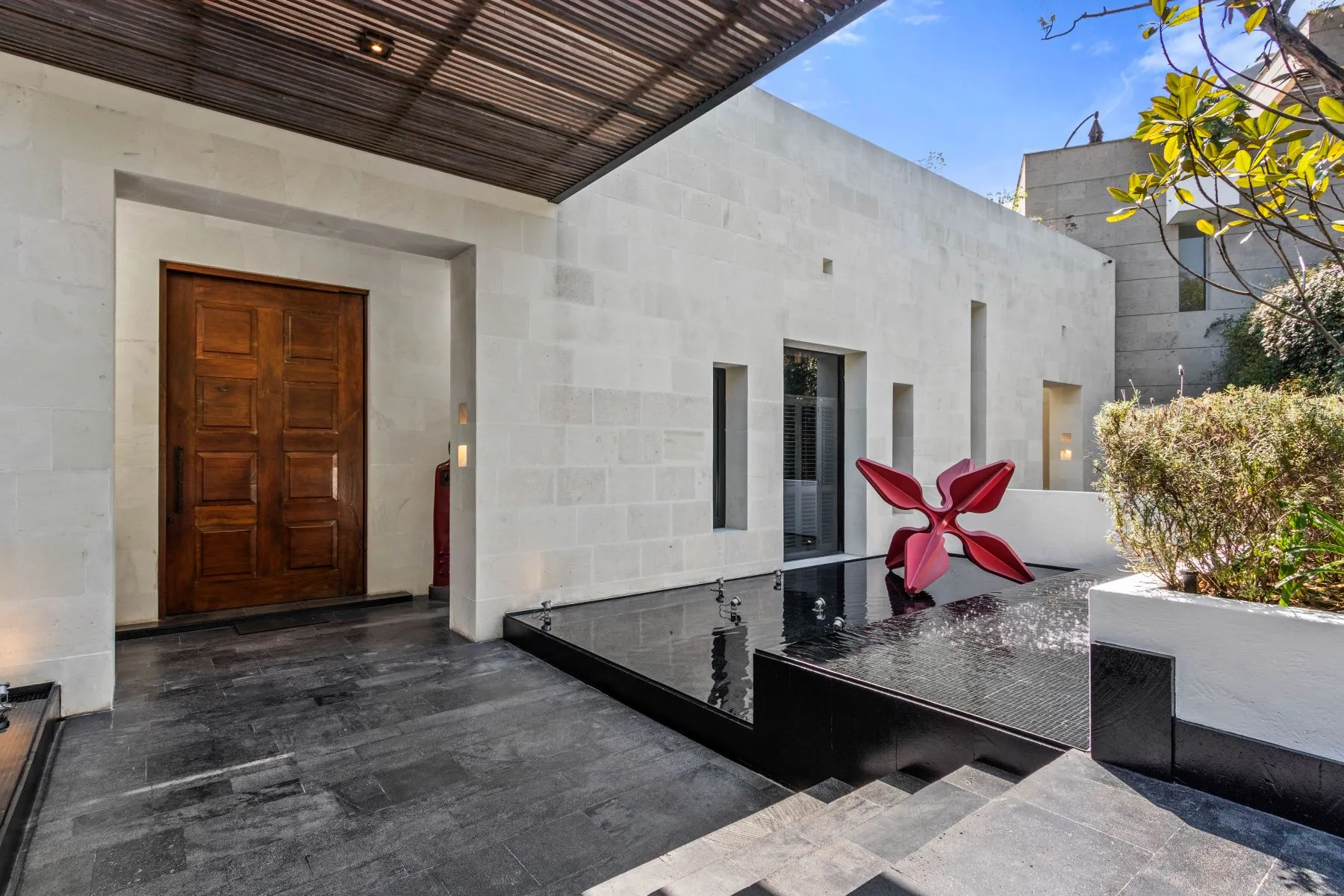
Mexico City, Mexico | Mexico Sotheby’s International Realty
The 2026 Men’s Fifa World Cup has not one host nation but three—Mexico, Canada and the U.S.—with 104 games being held in 16 cities across the North American continent this summer. But when the action kicks off on June 11, the tournament’s opening ceremony and first game of the group stages will be held at the iconic Mexico City Stadium.
Designed in 1966 by Mexican modernist architect Pedro Ramírez Vázquez for the then upcoming 1968 Olympics, the 83,000 capacity, earthquake-resistant venue is said to have been inspired by London’s original Wembley Stadium and Milan’s San Siro, and has already hosted two World Cup finals—in 1970 and 1986 respectively.Several months before the soccer fans descend, CDMX will be welcoming gallerists, artists and collectors for the always buzzy Zona Maco (February 4-8). Latin America’s leading international art fair is actually four fairs in one, platforming contemporary art, design, photography and antiques from galleries across the region to the world.
London, U.K.

Notting Hill, London | United Kingdom Sotheby’s International Realty
Two major museums will arrive in London in 2026: V&A East and the London Museum. The former sees the expansion of the design and decorative arts-focused Victoria & Albert Museum, which already has three destinations in the U.K. capital, as well as one in the city of Stoke-on-Trent and one in Dundee, Scotland. Located in east London’s evolving Olympic Park, V&A East is designed by Dublin firm O’Donnell + Tuomey. After opening on April 18, it will host major exhibitions, as well as festivals, installations and live performances.
The London Museum opens later in the year, in central London’s historic Smithfield Market, to a design by architects Asif Khan and Stanton Williams. A rebrand and relocation of the former Museum of London, this new destination will host exhibitions and events about the city, its culture and history. As ever, London is also home to some of the global cultural calendar’s key moments, from fashion weeks in February and September to the London Design Festival (September 12-20) and Frieze art fair (October 14-18).
Seoul, South Korea
Paris’ iconic modern art museum, Centre Pompidou, may be closed for renovations, but in May 2026, an outpost will open in the South Korean capital of Seoul. Named Centre Pompidou x Hanwha-Seoul, the gallery is located in Tower 63, a skyscraper in the financial district of Yeouido that is being transformed by leading French architect Jean-Michel Wilmotte. Exhibitions of the Pompidou’s modern and contemporary collections will be accompanied by an educational area for young visitors.
Seoul, already a thriving capital city and hub of K-pop music, has been expanding its cultural offering over the past five years, becoming a leading Asian destination. The Photography Seoul Museum of Art opened its doors in May 2025. Frieze art fair, which made its Seoul debut in 2022, returns in 2026 for its fifth edition (September 2‑5) having recently opened its new permanent exhibition space in the city, Frieze House Seoul. Not far from that cultural hub, apartments at “La Terrasse” offer verdant terraces with panoramic views of the Han River—and plenty of wall space for an avid art collector.
As fashion week season approaches again, which is the world’s most stylish city?

Sip or Skip? Expert Tips for How Long Opened Wine Really Lasts
If you received wine this holiday season, this guide is for you.
Windows 10 Users Can Still Get Free Security Updates. Here’s How
Microsoft no longer officially supports Windows 10, so do this if you want to keep using your older PC securely.
How to Stop Judging Yourself and the Past Year Harshly

“The way you look at things is the most powerful force shaping your life.” ~John O’Donohue
As often happens at this time of year, I recently found myself lamenting how quickly time had passed. In this agitated headspace, the myriad of goals I did not accomplish and the numerous targets I did not reach sprang to the forefront of my mind.
Though unwelcome and unhelpful, these thoughts pushed their way into my internal dialogue, reinforcing themselves by collecting evidence of where I’d fallen short.
Viewing my past year through a critical lens cultivates a feeling of dislike for myself. It not only robs me of the present moment but also colors my perspective on the year ahead, making optimism and self-trust harder to access.
I know I am not alone in this futile exercise. But the fact is, a judgmental mindset isn’t fixed. Although the word itself implies a rooted outlook, mindset is actually fluid. Your focus determines its orientation at any given moment.
While viewing your past year through a lens of judgment is one way to reflect on the past, viewing it through a lens of empowerment is another.
Reframe Your Year Through Reflective Positive Journaling
One of the simplest ways to shift your lens and guide your mindset toward empowerment is through structured reflection—specifically, reflective positive journaling.
Reflective positive journaling isn’t new, but it remains one of the most effective ways to cultivate a more compassionate and balanced view of your past year and, consequently, yourself. When you focus on what nourished and strengthened you, your year shifts from a list of unfinished goals into a meaningful story of your life.
As I moved through my reflective positive journaling process, I brought to light the many meaningful moments of joy and connection that had nothing to do with a to-do list.
They showed up in moments when I chose rest over productivity, spoke more gently to myself, or allowed “good enough” to be enough. What initially felt like an unremarkable year revealed itself to be one marked by steadiness, self-trust, and subtle courage.
With this reframing in mind, the prompts below are designed to gently guide your attention toward growth, nourishment, and moments you may have overlooked.
Positive Reflective Journal Prompts
Ways I Grew Without Realizing It
It’s easy to overlook the many subtle ways that you’ve changed over the year. Were there times when you made self-care a priority or were successful in upholding your commitment to honor your needs, perhaps saying no to social invitations that didn’t interest you?
Were there instances when you released the need to do everything perfectly or please everybody and instead accepted that you were worthy of love, respect, and admiration just as you are?
Were there periods when you intentionally cared for your body by making healthier eating choices, being more active, and getting a solid night’s sleep?
All of these moments of growth are easy to dismiss when viewed in isolation, but together they form the foundation of real, lasting change. Each small choice you made in your own favor quietly added up to a year of profound growth—growth that deserves to be seen and celebrated.
Looking back, I was surprised by moments when I chose flexibility over rigidity, curiosity over judgment, and patience over urgency. Small acts—such as asking a co-worker about her approach instead of assuming it was wrong, adapting to a change in my travel itinerary after a canceled flight, or slowing my walking pace to accommodate an older friend—became evidence of how I’d grown.
These moments didn’t feel dramatic at the time, yet in hindsight they revealed how much had shifted beneath the surface. This reminded me that growth often shows up not in dramatic achievements, but in the steady willingness to show up for myself and others, even when it feels uncomfortable.
Ways I Am Proud of Myself
It doesn’t matter how big or small the accomplishment; allow yourself to feel proud. Pride in yourself is a quiet, grounded appreciation of yourself.
Perhaps you stood up for yourself in a situation where you would normally remain quiet or worked your way through a scenario that you typically avoided out of fear and discomfort.
Did you help a loved one through a difficult period?
Did you learn something new or stick to a commitment that mattered to you?
What challenges did you overcome?
Each of these moments creates opportunities for you to celebrate your efforts, reflect on your courage, and feel satisfaction in your accomplishments throughout the year.
Reflecting on this prompt, I noticed how easily I had minimized my own efforts. Yet as I looked more closely, moments of quiet pride began to surface.
This year, I recognized when I stood up for myself in the face of a bullying personality instead of shrinking to avoid conflict, the times when I followed through on my commitment to exercise daily, and when I was able to stay present in situations that typically overwhelmed me.
None of these moments came with fanfare, but each required courage. Allowing myself to feel proud didn’t inflate my ego; it grounded me.
Occasions When I Felt Fulfilled
From the standpoint that fulfillment doesn’t equate to accomplishment, recall times when you were emotionally and spiritually nourished.
Did you attend a religious service that cultivated a sense of connection? Or did you have an experience with friends that left you feeling fulfilled and replenished?
Recognizing these moments helps you understand what truly nourishes your spirit and brings deeper meaning into your life.
For me, memories of deep conversations with my best friend, moments of shared laughter with my mom, and being fully present when playing with my four-year-old niece came to mind. These reminded me that deep satisfaction does not always come from checking items off a to-do list.
Moments When I Felt Peaceful and Content
Reflect on times when your nervous system settled and you felt calm and grounded.
Perhaps it was a quiet morning with tea, a slow walk outside, or an evening when you felt more at ease after turning off your devices.
When I reflected on my moments of peace and contentment, I noticed they most often found me when I spent time interacting with the natural world. Immersing myself in a slower-paced environment allowed my brain to decelerate and relax.
Activities That Fueled My Energy
Your energy is a compass; noticing what replenished you helps you understand what supports your well-being.
Which routines, hobbies, or connections left you feeling more energized than when you began?
Whether creative pursuits, athletic endeavors, time alone, or time with others, recognizing what gave you energy helps you hold your year in a more balanced and positive frame.
Looking back on what fueled my energy this year, I realized that some of my most replenishing moments came from time spent alone. Being by myself allowed me to breathe, reset, and reconnect with what truly mattered. Hiking, coloring, or tending my garden gave me a sense of calm focus while quietly refilling my reserves.
Happy, Unexpected Coincidences That Occurred
Unexpected moments of connection or synchronicity can remind you that delight and surprise were woven throughout your year.
Did an old friend you had recently been thinking about reach out, or did you unexpectedly run into a treasured co-worker from a previous job at the market?
Perhaps you found yourself in the right place at the right time to witness a natural wonder, such as a breaching whale or soaring hawk.
Life is full of unexplained coincidences that, when viewed in hindsight, can take on a synchronistic quality, reminding you that connection can arrive without effort.
When I reflected on this, I recalled how a spontaneous walk in my neighborhood put me in the right spot to run into my retired high school teacher, or when I followed an impulse to look skyward and witnessed a bald eagle leaving its nest.
I was surprised at how recognizing even small coincidences caused my year to take on a sense of delight, reminding me that magic had been quietly threading through it all along.
—
These prompts are just that—gentle invitations to pause and look back on the past year with a kinder, more balanced perspective. As you sit with your experiences, you will begin to remember the wins, the joys, and the moments of courage that might have otherwise been forgotten.
Carrying this perspective into the new year offers a valuable sense of direction. When you understand what supported your well-being and what fueled your energy, you naturally gain insight into what to prioritize moving forward.
Simple Ways to Use This Momentum in the New Year
Reconnect with people.
Who made an impact on your life this year? Reach out to them with a message or call to say thank you. Whether it’s a mentor, a friend, or a family member, expressing gratitude strengthens your relationships and reinforces the connections that matter most.
Set new intentions, not resolutions.
Instead of rigid resolutions, set intentions that align with the values you rediscovered about yourself. For example, you might aim to “be kinder to yourself,” “explore new opportunities,” or “prioritize rest and self-care without guilt.” Intentions offer direction without the pressure of achieving.
Create a small ritual to mark the transition.
Mark the end of the year with a simple ritual that feels meaningful to you. Light a candle, say a prayer, or write down what you want to release and safely burn the paper. You might also clean a room, organize a drawer, or clear your workspace. The physical act of making space mirrors the emotional process of creating room for the new year.
If you feel inclined, writing a letter to your future self can help capture what you learned and what you hope to carry forward. Sometimes selecting a single word—such as steadiness, growth, ease, or connection—that reflects how you want to be or what you wish to cultivate is a way of setting a launching point for the year.
As I prepare to welcome 2026, I will let my reflections guide me—reminding me of what truly mattered, the ways I was strengthened, and the seeds of growth I want to nurture in the year ahead. I will carry forward the lessons learned, the moments of courage, and the quiet victories, allowing them to shape my choices with intention and care.
Growth often happens quietly—but when we pause to acknowledge it, we give it space to deepen, allowing us to step into the new year with clarity, purpose, and a grounded sense of pride in how far we have come.

About Lynn Crocker
Lynn Crocker is passionate about helping people shift their inner dialogue and take charge of their thoughts to create a more purposeful, joyful, and fulfilling life—one thought at a time. If you’d like support carrying this mindset forward or guidance in cultivating steadier, more empowering inner dialogue, she invites you to schedule a free discovery call to see if mindset coaching is right for you. Learn more at lynncrockercoaching.com.
Get in the conversation! Click here to leave a comment on the site.